Why a Website Redesign is Essential for Growth and Better Engagement
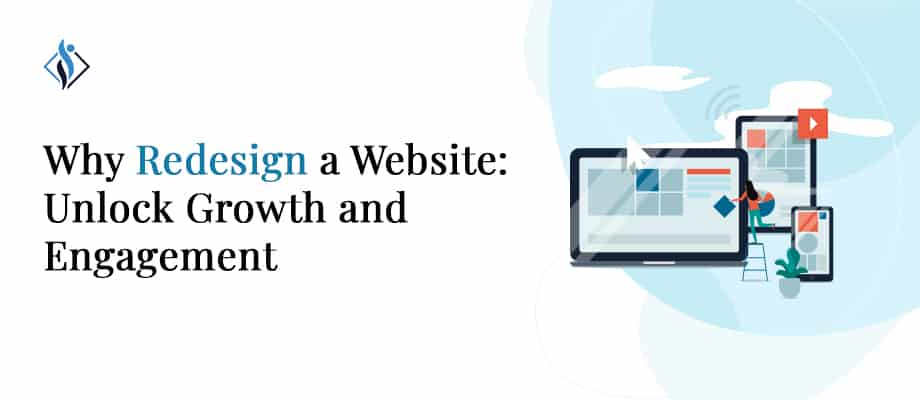

A website redesign is a smart move in today’s ever-evolving tech landscape. It’s not just about staying up-to-date but also about making a meaningful impact. An updated website grabs attention, offers better user experiences, and boosts your brand’s credibility. By refreshing your online face, you open doors to improved engagement and higher conversions. This overhaul isn’t just changed for the sake of it; it’s a strategic decision that reaps benefits. So, why redesign a website? Because it’s the gateway to reaping the benefits of website redesign in a way that truly matters. Let’s explore the blogs for more advantages.
Is a Website Rebuild better than a Redesign?
Rebuilding a website from scratch is a colossal undertaking, often requiring substantial resources and time. A redesign, on the other hand, can retain the underlying architecture while enhancing visual aesthetics and functionality. This equilibrium between innovation and familiarity often makes redesigning a more prudent choice.
What are the Benefits of Website Redesign?
Here are 8 importance of a website redesign:
1. More Brand Consistency and Credibility
By aligning the visual elements of a site with the brand’s ethos, a redesign fosters a coherent and credible image. In just a few seconds, visitors form perceptions, and a consistent design bolsters trust.
2. Faster Loading Times
In our impatient digital age, waiting is a source of frustration for many people. Accelerating load times ensures that visitors stay engaged and don’t abandon the site in haste.
3. Better User Experience
A seamless user experience (UX) is the linchpin of a successful online presence. A redesign that focuses on intuitive navigation and clear calls to action enhances user satisfaction.
4. Improved Responsiveness
With various devices at everyone’s fingertips, a website must adapt flawlessly. Improved responsiveness ensures that the content is accessible and attractive on all screens, big or small.
5. Take Benefit of New Features and Technologies
Embracing new technologies is pivotal to staying ahead of the curve. Whether utilizing a CMS platform or collaborating with a WordPress development company, a redesign can incorporate cutting-edge features and functionalities, thus enhancing user interaction and opening doors to new opportunities.
6. Improved SEO
Search Engine Optimization (SEO) is no longer a buzzword; it’s a fundamental strategy. A redesigned website with clean code and optimized content will likely rank higher in search engine results, reaching a broader audience.
7. Increased Lead Generation
The beauty of a website is its ability to attract potential customers. By optimizing the layout and content, a redesign can lead to a higher number of quality leads.
8. Better Conversion Rates
Turning visitors into customers is the ultimate goal. A well-thought-out redesign targets the psychology of conversion, employing persuasive design elements to guide visitors towards making a purchase or inquiry.
When should I redesign my website?
If the site appears outdated, loads slowly, or lacks mobile responsiveness, it’s time to consider a redesign. Moreover, a decrease in conversion rates or user engagement can also signal the necessity for a revamp.
How long does a Website Redesign take?
A comprehensive website redesign may take anywhere from a few weeks to several months, depending on complexity, goals, and resources.
What should be included in Website Redevelopment?
- Define your marketing goals.
- Personalize your website based on your brand.
- Use contrasting colours.
- Landing pages that focused on converting users.
- Mobile Friendliness.
Related Read: 13 Mistakes to avoid when redesigning your website
How can I redesign my website without affecting SEO?
Redesigning your website without losing SEO is a critical concern for many businesses. Here’s a detailed step-by-step guide to ensuring that your SEO rankings remain intact during the redesign process:
- Make a backup of all your existing content, meta tags, and URLs. You will need this information if you wish to restore the old design.
- Understand what works well on your current site by analyzing its current SEO performance. Find out what keywords, pages, and backlinks are performing well.
- Use the Same URL Structure (If Possible): Make sure 301 redirects are in place if you must change the URL structure. These tell search engines where the new content is located, preserving your rankings.
- Avoid Duplicate Content: Use canonical tags or avoid duplication altogether to avoid duplicate content.
- Optimize On-Page Elements: Carry over your current meta titles, descriptions, and header tags to the new design, making improvements where necessary.
- Mobile Optimization: Ensure that your redesign is mobile-friendly. Google’s mobile-first indexing means that mobile optimization is essential for SEO.
- Maintain Internal Linking Structure: If you change URLs, update the internal links accordingly. Broken links can harm SEO.
- Test Site Speed: Faster sites are favored by search engines. Optimize images and scripts to ensure that the new design loads quickly.
- Monitor and Fix Crawl Errors: Utilize tools like Google Search Console to identify and fix any crawl errors that may arise after the launch.
- Update Sitemap: Submit your updated sitemap to search engines to help them index your new pages.
- Communicate with Your SEO Team: If you are working with SEO experts, ensure that they are in sync with the web designers. The collaboration will help in a smooth transition without SEO loss.
- Monitor Performance Post Launch: Keep a close eye on metrics, rankings, and traffic after launch. Be prepared to make adjustments as required.
How much does website redesign cost?
The cost of a redesign varies widely, depending on factors like complexity, customizations, and the professionals hired. Investing wisely in a redesign can lead to exponential growth in brand value and customer trust.
In conclusion, understanding why to redesign a website, acknowledging the benefits and advantages of a website redesign, and realizing the importance of this process can enable businesses to make informed decisions. The cost should not deter; it’s an investment in the future. A successful redesign can be the catalyst for business growth and brand evolution, reflecting the ever-changing landscape of the digital world.
I am a web designer working at Samarpan Infotech. As a designer, I am a co-creator with my team. Creativity means loving whatsoever you do enjoy & celebrate it as a gift of God.