How AI Integration Can Help Manufacturing Businesses Scale Operations
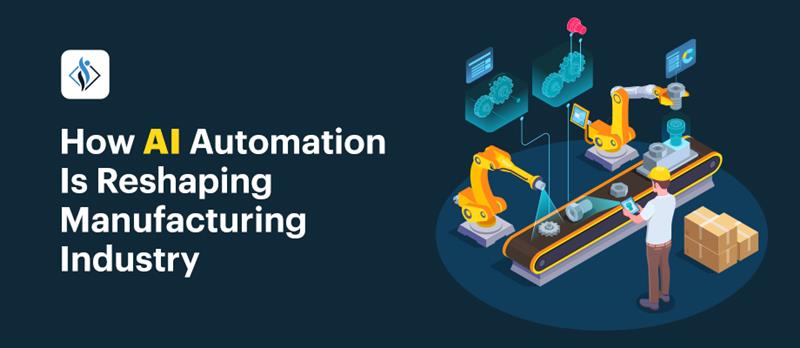

As global supply chains tighten and labor markets fluctuate, manufacturers are looking for ways to work smarter, not just faster. With AI integration, they can unlock real-time insights, automate decisions, and scale operations without adding complexity. From predictive maintenance to AI-powered quality checks, factories are evolving into intelligent ecosystems, and the shift is already underway.
Content Overview
Why AI Automation Matters Now in Manufacturing Operations
Manufacturers have long used automation to boost productivity, but today’s challenges require more than robotic arms and conveyor belts. What’s needed now is intelligent automation, systems that don’t just do, but also think, learn, and adapt. That’s exactly what AI brings to the table.
AI can reduce forecasting errors by 20-30% and cut lost sales from stockouts by up to 65%
AI is driving a major shift in how factories operate. Instead of fixed schedules, machines can now predict their own maintenance needs. Quality inspection moves from manual review to real-time, vision-based detection. Job scheduling adjusts dynamically based on demand, inventory, and worker availability. And decisions that once required layers of human input are now made instantly at the edge, close to where the action happens.
This isn’t just about technology. It’s about giving manufacturers the tools to become more resilient, agile, and scalable, exactly what’s needed to compete in today’s fast-moving market.
10 Key Areas for AI Automation in Manufacturing Industry
1. Predictive Maintenance and Fault Detection
Manufacturing plants run thousands of mechanical and electrical components simultaneously, each producing vibration, heat, lubrication, voltage, and performance signals. Manually reviewing this data is slow and makes it hard to detect early deterioration. When faults go unnoticed, it leads to unexpected breakdowns, delayed production, and expensive repair cycles.
AI-powered predictive reliability systems continuously analyze sensor and machine data to detect abnormal patterns and anticipate failures before they disrupt operations. When issues do occur, AI-driven root cause analytics help teams pinpoint the underlying reason and recommend corrective actions instead of trial‑and‑error diagnostics.
How AI Automation Can Be Implemented in Maintenance
- Sensor-led anomaly detection: Install vibration, temperature, and lubrication sensors, feeding continuous data into ML models to spot early signs of degradation before machines fail.
- Maintenance dashboards integrated with ERP/CMMS: Real-time predictions and health status are embedded into existing maintenance tools so technicians receive actionable alerts without switching systems.
- Failure-pattern intelligence: Rule engines and ML models learn from historical breakdowns, service logs, and part replacements to identify recurring failure modes and operational correlations.
- Technician feedback loop: When maintenance teams validate or override AI recommendations, their feedback retrains the model, improving accuracy over time.
4 Benefits of Predictive Maintenance
- Reduced equipment downtime through early fault detection
- Lower maintenance and spare part expenses
- Faster and more accurate diagnostics without guesswork
- Higher machine lifespan and production reliability
2. Supply Chain Forecasting and Smart Procurement
Manufacturers rely on accurate forecasts and dependable suppliers to avoid delays and cost overruns. When planning is manual or reactive, even minor supply chain issues can disrupt production.
AI-powered tools predict demand, optimize stock levels, and evaluate supplier performance in real time. This helps procurement teams act early, reduce waste, and keep production on track.
How AI Automation Can Be Implemented in Supply Chain Forecasting
- Demand forecasting using ML: Historical sales, seasonal patterns, and market trends are used to predict future inventory needs with higher accuracy.
- Smart reorder models: AI automatically recommends reorder quantities and timing based on real-time consumption, lead times, and safety stock levels.
- Supplier risk scoring: Algorithms evaluate vendor performance, delays, defect rates, and cost fluctuations to support better sourcing decisions.
- Integrated planning dashboards: AI insights are embedded into existing ERP or procurement tools so purchasing teams can act without switching platforms.
- External data ingestion: Weather, transport strikes, commodity price changes, or geopolitical alerts are fed into forecasting to surface early risk signals.
4 Benefits of AI Automation in Pocurement
- Fewer stockouts and reduced excess inventory
- Faster and more confident procurement decisions
- Lower carrying costs and safer material planning
- Higher supply chain visibility and resilience against disruptions
3. AI-Powered Material Handling & Warehouse Automation
Material handling bottlenecks cost manufacturers time, money, and flexibility. When movement relies on fixed rules or manual tracking, it’s hard to adapt quickly, leading to misplaced inventory, slow order picking, and production delays.
AI automates and optimizes material flow in real time. From smart routing of autonomous vehicles to dynamic storage planning, AI ensures the right materials reach the right place, at the right time.
How AI Automation Can Be Implemented in Warehouse
- Smart routing for AGVs (Automated Guided Vehicles)/AMRs (Autonomous Mobile Robots): AI dynamically adjusts vehicle paths based on traffic, order urgency, and floor layout.
- Computer vision for item identification: Cameras identify items, check barcodes, or verify labels without manual scanning.
- Warehouse layout optimization: ML analyzes item velocity and heatmaps to recommend slotting changes for faster access.
- Demand-driven restocking: AI triggers automated material replenishment based on live consumption and production schedules.
- Workload balancing: Orders are distributed across zones and workers based on AI-calculated priority and availability.
4 Benefits of AI Powered Warehouse Management
- 30–50% increase in warehouse throughput using AI-led routing and picking optimization
- 20–30% reduction in labor costs
- Improved inventory accuracy and reduced picking errors by up to 99%
- Real-time material availability reduces production interruptions
4. Vision-Based Quality Inspection
Manual quality checks are prone to inconsistency and human fatigue. As output scales, so do the chances of missed defects and delayed corrections, costing manufacturers time, material, and customer trust.
AI-powered computer vision systems inspect products in real time, using deep learning models trained to detect a wide range of defects across various conditions. These systems work faster and more accurately than humans and never lose focus.
How Automation Can Be Implemented for Vision-Based Quality Checks
- Camera system setup: Install high-speed industrial cameras at critical points in the assembly or packaging line.
- Model training on defects: Use thousands of labelled images (e.g., good vs. faulty welds, misaligned parts) to train deep learning models.
- Edge-based processing: Run models on local AI hardware for low-latency real-time inspection.
- PLC (Programmable Logic Controller) integration: Link computer vision outputs to production logic to trigger rejections or alerts automatically.
- Continuous learning: Feed newly identified defects back into the system to improve detection over time.
4 Benefits of Automated Quality Inspection
- Up to 90% reduction in defect escape rates.
- 25–50% fewer false positives compared to rule-based systems, reducing unnecessary rework.
- 5x faster inspection speed over manual methods.
- Standardized quality control across global production facilities.
5. Generative Design & Simulation
Designing a part that’s strong, light, affordable, and manufacturable is a slow, manual process. Engineers typically test one idea at a time, which limits innovation and often leads to suboptimal results.
Generative design tools powered by AI flips this process. Engineers input their goals, and the system explores thousands of validated design options, automatically simulating, ranking, and refining them based on real-world constraints.
How to Implement Automated Product Design
- Define engineering constraints: Set goals such as maximum weight, material usage, stress limits, and design space in supported CAD software.
- Run AI-powered design exploration: Use tools like Autodesk Fusion 360 or Siemens NX to auto-generate and rank viable design options.
- Simulate structural behavior: Use AI-enhanced FEA (finite element analysis) to simulate real-world forces on each design iteration.
- Select & refine top candidates: Choose optimal designs based on performance and cost trade-offs and export them for prototyping or CAM.
- Iterate with performance data: Feed testing or usage data back into the AI to improve future design recommendations.
4 Benefits of Gen AI Product Design
- Up to 40% reduction in material waste
- Faster time-to-prototype cycles
- Lighter, stronger components with optimized geometry
- Fewer manual design iterations needed
6. Autonomous Factory Operations
Most factories run on fixed rules and manual oversight, which makes them slow to adapt when something changes, whether it’s a machine failure or a shift in product demand.
With AI-driven digital twins and autonomous control systems, factories can simulate their operations in real time and let the system self-adjust. This allows production lines to optimize themselves continuously, improving efficiency without human input.
How to Automate Factory Operations with AI
- Build digital replicas of machines and systems: Use sensor data and process maps to create virtual models of assets and workflows.
- Apply AI models for real-time simulation: Predict output, energy consumption, or machine wear under changing input conditions.
- Enable autonomous decision loops: Let AI trigger control changes (e.g. speed, pressure, temp) in live systems via MES/PLC integrations.
- Use reinforcement learning: Train AI to optimize production goals by learning from continuous feedback and outcomes.
- Test “what-if” scenarios safely: Use the digital twin to simulate adjustments or new product runs before live deployment.
4 Benefits of AI Automation in Factory Operations
- Up to 20–25% increase in operational efficiency
- 30-50% reduction in downtime by detecting issues and adjusting parameters
- Continuous optimization of energy, throughput, and cycle times
- Faster deployment of new product variations via simulation
7. Intelligent Resource Scheduling (Machines + Labor)
Manual scheduling tools can’t keep up with changing job orders, downtime, and workforce constraints. When plans are rigid, production bottlenecks and missed deadlines are almost guaranteed.
AI-powered scheduling systems analyze real-time data to optimize how jobs are assigned across machines and operators. These models adapt instantly when availability, priorities, or capacity shifts, keeping operations flowing with minimal human intervention.
How AI Automation Can Be Implemented in Resource Scheduling
- Real-time data sync: AI ingests live data from MES (manufacturing execution system), ERP, and CMMS systems to track resource status minute by minute.
- Predictive rescheduling: AI dynamically reassigns jobs when disruptions (e.g., breakdowns, absences) occur.
- Production-aware labor planning: Algorithms allocate workers based on job complexity, setup time, and machine compatibility.
- Shift optimization: Reinforcement learning models find optimal crew mixes to meet demand while minimizing fatigue and overwork.
4 Benefits of AI in Resource Scheduling
- 10-20% increase in machine utilization
- Faster response to unplanned changes in real time
- Improved SLA performance with fewer delivery delays
- Better workforce morale from fairer shift allocation
8. Dynamic Pricing for Custom Manufacturing
In job-based or custom production, quoting is slow and often inaccurate. Teams either underprice and lose margin or overprice and lose the job.
AI streamlines quoting by calculating the optimal price for each job based on live cost data, machine availability, and historical trends, ensuring quotes are fast, profitable, and competitive.
How AI Powered Dynamic Pricing Can Be Implemented
- Historical job analysis: AI is trained on past quotes, win rates, costs, and production outcomes to uncover pricing patterns.
- Real-time cost feeds: Live data from ERP, material vendors, or labor databases is pulled to ensure up-to-date quote inputs.
- Smart quote configurators: AI-enhanced CPQ (Configure, Price, Quote) tools generate personalized quotes with minimal manual input.
- Production-aware pricing: Models factor in lead time, capacity usage, changeover costs, and job complexity.
- Customer-specific models: Algorithms tailor pricing based on buyer behavior, negotiation history, and order size.
4 Benefits of AI Powered Dynamic Pricing
- Faster, more accurate quotes
- Reduced underpricing risk on complex jobs
- Higher quote-to-win conversion rates
- Improved visibility into profitability per quote
9. Voice AI & Smart Assistance for Workers
Factory teams often waste time searching for instructions or waiting for support. This slows down productivity and increases the chance of mistakes, especially for new hires or in urgent repair scenarios.
Voice AI assistants solve this by giving workers real-time answers through spoken commands. They pull live data and instructions from SOPs, ERPs, or maintenance systems, helping teams solve problems without ever touching a screen.
How to Deploy Smart Assistance for Workers
- Develop a domain-specific voice model: Train AI on internal SOPs, maintenance logs, FAQs, and technical documents.
- Use smart headsets or mobile devices: Deploy voice assistants via wearable devices or rugged tablets for easy on-floor access.
- Integrate with ERP/MES systems: Enable real-time data pull for inventory, job status, or shift updates.
- Deploy conversational interfaces: Workers can ask contextual questions like “How do I reset line 3?” or “What’s the oil level in Tank A?”
- Include feedback and escalation: Allow workers to flag unclear responses or escalate to human supervisors when needed.
4 Benefits of Smart Assistance for Workers
- Reduced downtime from faster troubleshooting
- Improved productivity with hands-free information access
- Shorter ramp-up time for new employees
- Safer operations with real-time protocol guidance
10. AI for Sustainability and Carbon Optimization
Most manufacturers struggle to measure, let alone reduce their environmental impact. Data is scattered, real-time tracking is rare, and energy optimization relies on gut feel.
AI changes this by providing real-time insight into energy use, carbon emissions, and process waste. It identifies inefficiencies and recommends actions that reduce footprint while keeping output stable.
How to Reduce Carbon Footprints Using AI Automation
- Energy flow modeling: AI analyzes usage from sensors across machines, HVAC, lighting, and utilities to create real-time consumption maps.
- Carbon footprint estimation: Algorithms convert energy and material data into Scope 1, 2, and 3 emission metrics for ESG tracking.
- Process-level optimization: AI recommends operational changes that reduce waste, idle time, or unnecessary consumption.
- Predictive peak load management: Models forecast energy spikes and suggest load balancing or scheduling shifts.
- Sustainability reporting automation: AI automatically generates ESG reports aligned with frameworks like GRI or CDP.
4 Benefits AI Powered Sustainable Manufacturing
- Real-time visibility into energy and emissions
- More accurate and audit-ready ESG reports
- Reduced utility costs through usage optimization
- Faster identification of waste and inefficiencies
5 Types of AI Implementation Models for Manufacturers
AI integration doesn’t have to be a massive overhaul from day one. Manufacturers can start small, scale smart, and choose a rollout model based on their business size, digital maturity, budget, and risk appetite. Below are five practical implementation models, each designed to match where your factory is today, and where you want it to go.
1. AI-as-a-Service (AIaaS)
AI-as-a-Service platforms provide cloud-hosted, pre-trained AI tools that you can subscribe to and use immediately, no data science team required. Services like Amazon Lookout for Equipment, Azure AI Studio, or Google Vertex AI let you run models for demand forecasting, equipment monitoring, or defect detection by simply plugging in your factory data.
Best for:
Small and mid-sized manufacturers that want to experiment quickly, lack in-house AI talent, or want to avoid heavy upfront investments.
These businesses may not have large IT teams or internal data scientists but still want to benefit from AI. AIaaS removes the technical burden and makes adoption affordable and fast, ideal for testing AI benefits without the long setup.
Benefits:
- Quick launch with minimal infrastructure setup
- Pay-as-you-go pricing based on usage
- No need to build or maintain AI models
- Can scale gradually as confidence grows
2. Point-Solution AI Pilots
This model focuses on solving one specific operational problem using AI, like deploying computer vision for final assembly inspection, or anomaly detection for one critical machine. It’s ideal for proving ROI and learning before scaling up.
Best for:
Mid-sized manufacturers who are AI-curious but want to validate value before broader investment.
These companies often have the budget and tech stack for innovation but are cautious about risk. A narrow pilot gives them hands-on experience, helps build internal alignment, and showcases measurable wins quickly (usually within 60–90 days).
Benefits:
- Lower risk, faster execution
- Easy to track performance gains (e.g., defect reduction, downtime savings)
- Builds internal AI literacy and buy-in
- Creates a blueprint for future use cases
3. Embedded AI in Existing Platforms
Many ERP, MES, SCADA (Supervisory Control and Data Acquisition) and quality systems already include AI modules or plug-ins such as SAP’s predictive planning, Microsoft’s AI Copilot, or Siemens MindSphere. Manufacturers can unlock these features without needing new tools or infrastructure.
Best for:
Manufacturers with modern software platforms that want to use AI with minimal disruption or training.
If your factory is already using systems like SAP, Oracle, Microsoft Dynamics, or Siemens, it’s often easier and cheaper to turn on built-in AI features rather than starting from scratch. Your team is already trained on the system, and integration headaches are avoided.
Benefits:
- Low friction rollout
- No new user interfaces to learn
- Vendor-backed model tuning and support
- Enables AI use within existing operational flow
4. Edge AI for Real-Time Response
Edge AI involves running AI models directly on devices installed on your machines, sensors, or cameras, so decisions (like defect detection or safety shutdowns) happen in milliseconds without needing to send data to the cloud.
Best for:
Manufacturers that operate in real-time environments, like high-speed assembly lines or remote locations with low internet bandwidth.
In scenarios where delay is unacceptable (e.g., safety monitoring, robotic movement, or product scanning), edge AI ensures lightning-fast response times. It also supports plants in remote or bandwidth-constrained environments where cloud processing isn’t practical.
Benefits:
- Instant response (no network lag)
- Works offline or with poor connectivity
- Ideal for safety, robotics, and machine vision
- Scales easily across distributed factory sites
5. Cognitive Factory Transformation
This model represents a full AI transformation strategy, where digital twins, autonomous decision-making, AI-enhanced planning, and data-driven control systems are embedded throughout the factory. AI isn’t just assisting operations, it’s actively running them.
Best for:
Large manufacturers, smart factory pioneers, or multi-site enterprises looking to build long-term competitive advantage through deep AI integration.
These organizations typically already have IoT infrastructure, centralized data platforms, and executive buy-in. They’re ready to go beyond pilots and use AI to drive end-to-end optimization, strategic agility, and operational autonomy.
Benefits:
- Enterprise-wide visibility and control
- Predictive and adaptive operations
- Lower cost-to-serve and faster innovation cycles
- Sustainable differentiation in global markets
Quick Comparison Matrix
| Model | Best For | Setup Time | Data Ownership | Scalability |
|---|---|---|---|---|
| AI-as-a-Service (AIaaS) | Small manufacturers or pilot-stage projects | 2–6 weeks | Shared/cloud-based | High |
| Edge AI | Manufacturers in remote or latency-sensitive environments | 2–3 months | On-device/local | Medium |
| Custom AI Platforms | Large enterprises with dedicated tech teams | 6–12 months | Full internal control | High |
| ERP/IIoT Embedded AI | Factories using platforms like SAP, Oracle, Siemens | 1–3 months | Vendor-controlled | Limited to platform capabilities |
| Hybrid AI Systems | Mid-sized manufacturers scaling beyond pilots | 3–6 months | Mix of cloud + local | High |
7 Challenges Manufacturers Must Address
- Machine data isn’t standardized or accessible
Different machine OEMs (original equipment manufacturers) use different PLCs, data formats, and protocols. Pulling usable data across a heterogeneous shop floor is complex, often requiring custom middleware or manual intervention. - Highly variable production makes modeling difficult
In high-mix, low-volume (HMLV) environments, like job shops or custom fabricators, every order is different. This makes it hard to train consistent AI models for scheduling, quoting, or defect detection without massive datasets. - Reactive firefighting culture
Many manufacturing teams are used to responding to problems, not predicting them. This reactive mindset can deprioritize long-term AI implementation in favor of urgent, short-term fixes. - Tribal knowledge isn’t captured digitally
Critical shop floor decisions often rely on experienced operators who know how to fix when something’s off. This informal, undocumented expertise doesn’t make it into systems, leaving AI blind to key insights. - One factory runs multiple systems with no common interface
Plants may have different departments or lines running separate scheduling systems, quality software, and inventory tools, often not integrated. AI needs a centralized or federated view to function, but that’s rarely available without significant IT effort. - Compliance, quality, and audits resist “black box” logic
For regulated industries (e.g., aerospace, pharma, food), every decision must be traceable. If AI can’t provide explainable logic, such as why it flagged a part or changed a schedule, it won’t pass audit. - High cost of sensor retrofitting
Older equipment often lacks IoT sensors. Installing and maintaining them across every asset, just to generate usable AI training data, can be expensive and time-consuming, especially with multiple legacy systems in play.
Conclusion
AI is becoming essential for manufacturers aiming to scale with speed and precision. From predictive maintenance to smart scheduling and quality control, AI-driven systems help reduce costs, improve uptime, and enable faster decision-making. The key is to start with the right use case, clean data, and a realistic implementation model tailored to your plant’s operations.
At Samarpan Infotech, we specialize in AI Integration for manufacturers across shop floors, supply chains, and business systems. With deep technical expertise and industry-specific experience, our team supports you from pilot to scale, turning fragmented processes into intelligent, connected operations.
With over 10 years of experience in Tech industry at Samarpan Infotech with architect system, problem solving and creativity. "Today is the only day. Yesterday is gone".